

What is Tarot Reading?
Tarot reading typically involves drawing cards from a deck (often the 78-card Western “tarot” deck) and interpreting the symbolic imagery of the cards in relation to a question or life situation. In practical use it has evolved beyond simple fortune-telling: many practitioners treat the cards as prompts for self-reflection, metaphorical dialogue with one’s inner life, and a way to access intuition and meaningful patterns in experience.
How does Tarot reading benefit the mind, body, and spirit?
- For the mind, tarot reading can stimulate self-awareness, prompt narrative re‐framing of difficulties and foster insight into personal dynamics.
- For the body, engaging in the ritual of drawing cards and reflecting can activate a pause, slow the nervous system, encourage mindfulness and emotional containment.
- For the spirit, the symbolic and archetypal nature of the cards invites meaning‐making, connection to deeper layers of psyche, and a sense of coherence or purpose beyond the purely mundane.
In therapeutic contexts, tarot can help surface unconscious material in a contained, symbolic way, supporting emotional integration (mind), calmer nervous-system states via ritual and reflection (body), and a sense of purpose, connection, or spiritual guidance (spirit). saskiacaviet.nl+1
In qualitative and case-based research, people report greater self-awareness, insight, narrative reframing, and meaning-making after engaging with tarot. Semantic Scholar+2JMU Scholarly Commons+2
Tarot is increasingly studied as a reflective and projective tool rather than as “proven fortune-telling.” UVicSpace+1
What does scientific research reveal about Tarot?
While the research base is still fairly modest and cautious in its claims, several studies point to beneficial psychological effects when Tarot is used in a reflective or therapeutic manner.
- A study by Hofer (2009) found that regular Tarot users employed the cards primarily as a tool for self-reflection, gaining insight into current situations and possible action plans — especially in times of change or difficulty. students.bowdoin.edu+2Semantic Scholar+2
- Au-Yeung (2025) argues that Tarot’s symbolic language facilitates improved self-awareness, emotional clarity, and meaning-making, particularly when understood through frameworks such as narrative therapy or archetypes. grhas.centraluniteduniversity.de+1
- Cervantes (2022) analyses the “limitations and potentials” of Tarot reading in times of uncertainty, suggesting that the ritual and symbolism may offer comfort, structure and reflective opportunity in major life-transitions. ResearchGate
- A Forbes article (2024) quotes psychologists saying that entering a Tarot reading with intention and openness is correlated with feelings of uplift, clarity or peace—not so much because of “predicting the future,” but because it provides a space for meaning and reflection. Forbes
Caveats & what the evidence doesn’t show:
- There is little rigorous evidence that Tarot works as a predictive tool in a scientific sense; many of its beneficial effects seem to stem from psychological processes (e.g., prompting reflection) rather than paranormal causation. The Skeptic+1
- Some critiques note the possibility of the “Barnum effect” (where broadly applicable statements feel highly personal) and “cold reading” dynamics in readings—so the value may depend strongly on how the reading is framed and used. students.bowdoin.edu+1
Want to discover Tarot and receive some guidance from an experienced professional as you begin your practice?
Join our Wolf Moon Retreat and learn Tarot with a dynamic group of like-hearted women this January 3-4, 2026!
More Research and Articles on Tarot
- Hofer, G. M. (2009). Tarot Cards: An Investigation of Their Benefit as a Tool for Self-Reflection (Master’s thesis, University of Victoria). UVicSpace+2Semantic Scholar+2
- Qualitative study of regular tarot users. Hofer found that participants primarily used tarot for insight and self-reflection, not fortune-telling: to clarify current situations, explore feelings, and consider possible action plans. Users described increased self-awareness, perspective-taking, and a sense of guidance around life changes—core psychological and spiritual benefits.
2. Semetsky, I. (2005). “Integrating Tarot Readings into Counselling and Psychotherapy.” European Journal of Counselling & Psychotherapy, 7(3), 221–232. saskiacaviet.nl+1
- Uses 15 counselling cases to show how tarot can function as a projective, symbolic tool in therapy. Semetsky argues that tarot images help clients bring unconscious material and implicit feelings into awareness, reframe life stories, and find new meanings—supporting emotional integration (mind) and a sense of purpose or vocation (spirit).
3. Clinton, E. (2024). Divining the Self: Applying Tarot as a Projective Technique in Counseling (Ed.S. thesis, James Madison University). JMU Scholarly Commons
- Proposes tarot as a structured projective technique, similar to other imagery-based tools. Clients “project” concerns and hopes into the cards, which then become a safe medium to explore identity, values, and possibilities. The author highlights narrative reframing, empowerment, and increased clarity about next steps—psychological and behavioral benefits with possible downstream effects on stress and bodily tension.
4. Ivtzan, I. (2007). “Tarot Cards: A Literature Review.” (Unpublished; frequently cited in later work). Spiegeloog
- Summarizes the sparse but growing academic literature on tarot. While not a clinical trial, this review notes repeated themes across studies: tarot use is associated with enhanced self-reflection, meaning-making, and coping with uncertainty, particularly when framed psychologically rather than as strict divination.
5. Cervantes, A. (2022). “The Limitations and Potentials of Tarot Readings in Times of Uncertainty.” saskiacaviet.nl+1
- A scholarly analysis of tarot as a practice people turn to in periods of instability (e.g., pandemics, social upheaval). Cervantes emphasizes tarot’s ritual structure and symbolic language as providing containment, emotional processing, and comfort, while also noting limitations (e.g., overreliance, ambiguity). This speaks directly to mind–body–spirit regulation under stress.
6. Au-Yeung, C. (2025). “Tarot as a Narrative and Archetypal Tool for Self-Awareness.” Journal of Humanistic and Transpersonal Studies, 3(1). cultivatingcapacity.com+1
- Positions tarot within narrative therapy and archetypal psychology. Argues that working with tarot images helps people externalize stories, see multiple perspectives, and connect personal struggles to larger archetypal themes (e.g., The Fool’s journey). Reported benefits include increased coherence of life story, emotional clarity, and spiritual connection.
7. Bowdoin Science Journal (2024). “It’s in the Cards: A Dive into Tarot Card Psychology, Interpretation, and Therapeutic Applications.” students.bowdoin.edu
- A student-run but well-researched review of tarot psychology. It summarizes Hofer and Semetsky’s work plus related concepts like the Barnum effect, projection, and cold reading, concluding that tarot’s value is primarily as a structured reflective practice that can support mental health when used intentionally, while cautioning against viewing it as scientifically predictive.
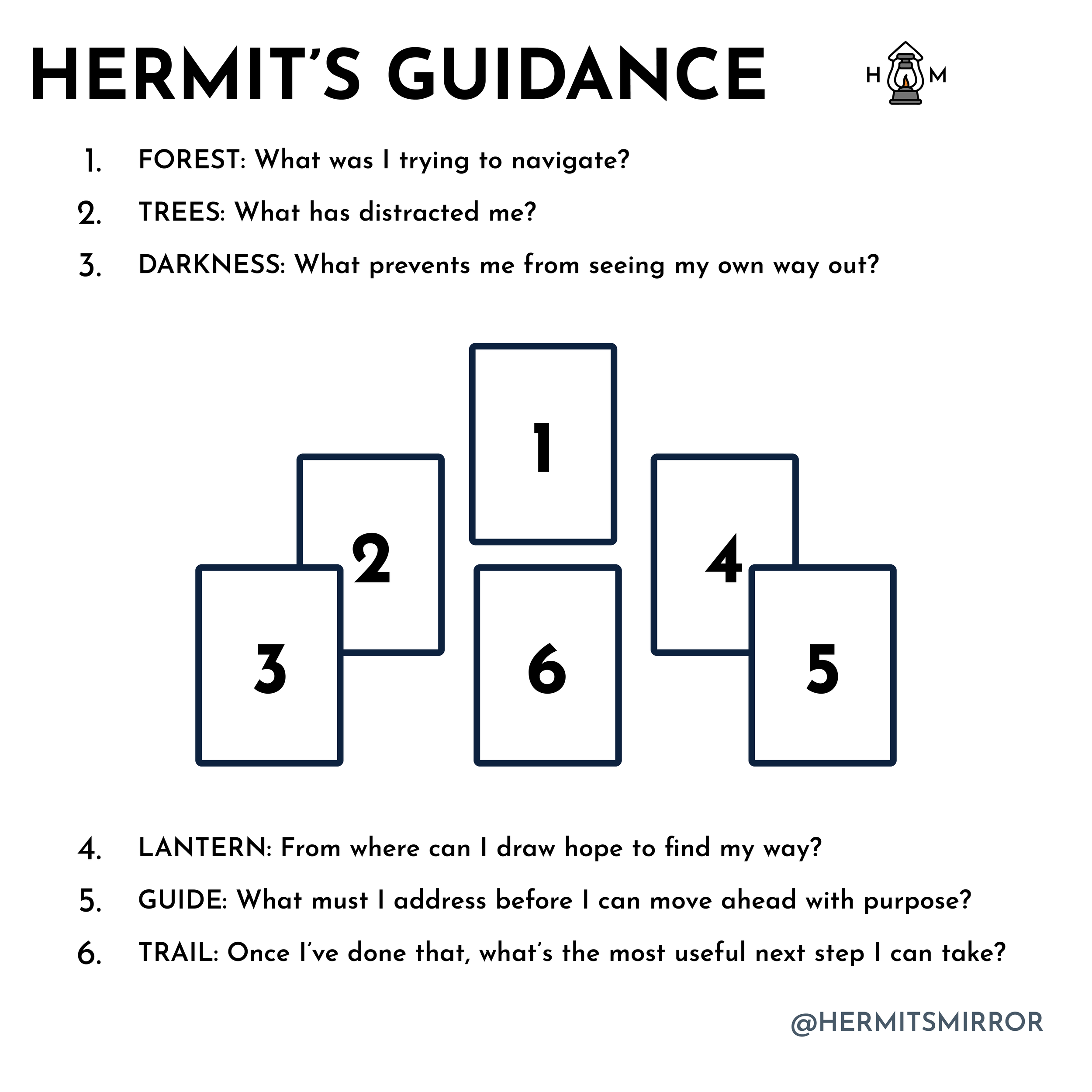
Here are two examples of Tarot “spreads” you can try.

Leave a Reply